




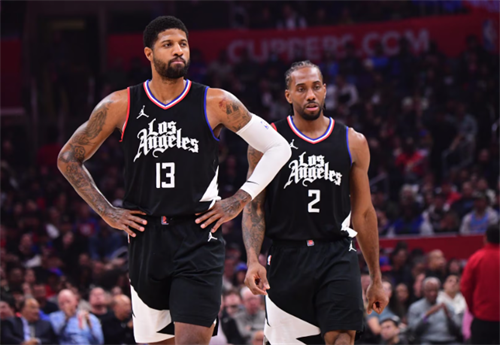
Watch an NBA game closely today and you’ll notice something that rarely makes highlight reels. The most dangerous play on the floor is often not a step-back three or a thunderous dunk, but a pass that happens almost too fast to see. The ball touches a player’s hands and is gone again, delivered before the defense can react. No dribbles. No hesitation. No contact. Just advantage.
Chris Paul and Kawhi Leonard are masters of this quiet weapon: the quick pass.
In an era defined by spacing, pace, and defensive athleticism, the quick pass has become both an offensive accelerator and a form of self-defense. It creates open shots, punishes rotations, and—just as importantly—helps elite players avoid fouls that can derail possessions or entire games.
What Is a “Quick Pass,” Really?
A quick pass is not a flashy pass. It is not a no-look, behind-the-back, or cross-court laser—though it can occasionally resemble those things. At its core, a quick pass is defined by timing, not difficulty.
A quick pass occurs when a player:
Makes a decision immediately upon receiving the ball;
Passes before the defense fully commits;
Uses minimal dribbling, if any;
Exploits an advantage that already exists, rather than trying to create one through force.
In coaching language, it’s a “0.5 decision”—a term popularized in NBA circles to describe making a pass, shot, or drive within half a second of catching the ball. Gregg Popovich and the San Antonio Spurs have long emphasized this principle as a way to keep the defense in constant reaction mode.(Spurs coaching clinics, USA Basketball resources).
The quick pass is the opposite of ball-stopping. It keeps the offense alive and the defense off balance.
The Origins of the Quick Pass: Not New, Just Urgent
The quick pass did not originate with Chris Paul or Kawhi Leonard. Its roots run deep.
Early motion offenses emphasized passing before dribbling. European systems—particularly in Spain and Serbia—have long prioritized early ball movement over isolation. Coaches in those systems teach players to read space and advantage rather than attack blindly.
What has changed is context.
Modern NBA defenses are faster, longer, and more aggressive than ever. Help defenders rotate earlier. Weak-side defenders stunt harder. Officials allow more physicality on the perimeter while cracking down on offensive fouls like charges and push-offs.
In that environment, holding the ball has become dangerous. Every extra dribble invites:
A reach-in;
A body bump;
A charge attempt;
A late-clock bailout;
The quick pass is not stylistic. It is evolutionary.
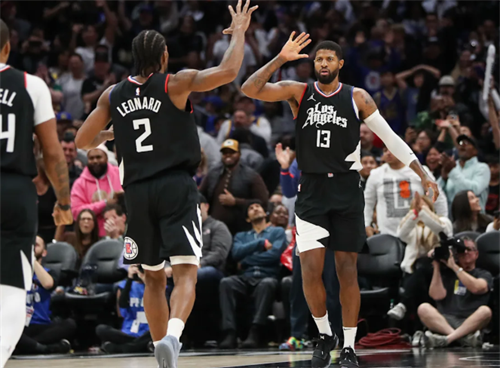
Chris Paul: The Surgeon of the Quick Pass
Chris Paul’s game is often described as methodical, but that undersells how fast his mind operates. Paul does not rush. He arrives early.
In the pick and roll, Paul is lethal not because he dribbles defenders into submission, but because he recognizes the defense’s choice instantly. Drop coverage? He snakes the dribble and delivers a pocket pass. Switch? He hits the short roll before help arrives. Tag from the weak side? The ball is already swinging to the corner.
According to NBA tracking data, Paul consistently ranks among league leaders in assist-to-turnover ratio and points generated per possession in pick-and-roll situations.That efficiency is built on quick passing decisions.
What makes Paul exceptional is his ability to read defenders’ feet and hips, not just their hands. He passes before defenders fully extend, before arms enter the lane, before bodies collide. That anticipation eliminates contact—and with it, foul risk.
Paul’s quick pass is quiet. It rarely draws cheers. But it wins games.
Kawhi Leonard: The Quick Pass as a Counterpunch
Kawhi Leonard’s quick pass looks different because his role is different.
Leonard is a scorer first. Defenses load up on him in the post, on the wing, and at the nail. Help comes early and often. For years, critics questioned whether Leonard would pass quickly enough out of pressure.
He answered that question with championships.
Leonard’s quick pass usually arrives after a brief threat. One hard dribble. One shoulder dip. Then the ball is gone. He does not wait for the double-team to arrive fully. He passes as it forms.
In post-up situations, Leonard often hits cutters or weak-side shooters before defenders can establish legal guarding position. That timing matters. By passing early, Leonard avoids offensive fouls that plague wings who hold the ball and try to power through traffic.
His strength allows him to pass through contact—but his intelligence allows him to pass before contact exists.
The Hidden Connection Between Quick Passing and Foul Avoidance:
Fouls are not random. They are usually the result of late decisions.
Offensive fouls occur when a player drives without advantage. Charges happen when help defenders arrive early and the ball handler refuses to acknowledge them. Reach-ins happen when ball handlers expose the ball too long.
Quick passes eliminate these scenarios.
By moving the ball early:
The defense cannot set its feet;
Help defenders arrive late;
Contact becomes unnecessary;
Officials are less involved;
The NBA’s emphasis on freedom of movement has not removed physicality—it has redistributed it. Players who hold the ball absorb it. Players who move the ball avoid it.
That is not coincidence.
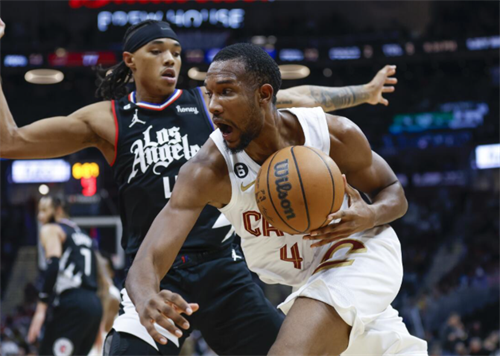
Common Game Situations Where the Quick Pass Prevents Fouls:
1. Attacking Closeouts
When a defender sprints at a shooter, the offense gains an advantage. The mistake is trying to beat that defender with the dribble. The smarter play is the quick pass to the next open man, forcing a second rotation.
2. Pick and Roll Short Rolls
Bigs who catch on the short roll often draw charges because they hesitate. Paul and Leonard’s teammates succeed because the ball moves immediately to shooters or dunkers.
3. Post-Ups Against Early Help
Holding the ball invites double-teams and offensive fouls. Passing early punishes the help and discourages future pressure.
4. Transition Advantage
In semi-transition, quick hit-ahead passes create layups before defenses are set, avoiding bodies at the rim.
Skills Required to Execute a True Quick Pass:
The quick pass is not about arm strength. It is about preparation.
-Vision: Seeing the floor before catching the ball
-Footwork: Being balanced enough to pass immediately
-Spacing Awareness: Knowing where teammates should be
-Trust: Believing the pass will lead to the right outcome
As USA Basketball coaching materials emphasize, players must “read advantage, not defenders” .The advantage exists briefly. The quick pass captures it.
Practice and Coaching: Teaching Speed Without Chaos
The quick pass cannot be taught through isolated passing drills alone. It must be embedded in decision-making.
Effective drills include:
One-dribble limits in half-court sets;
Advantage-disadvantage games (3-on-2, 4-on-3);
Read-based pick-and-roll reps;
Time-constrained ball movement drills;
The emphasis is not on creativity, but clarity. Coaches want players to understand that the best pass is often the simplest—and earliest—one.
Common Mistakes That Undermine the Quick Pass:
Even skilled players make errors:
-Passing without reading the defense;
-Forcing passes that are “quick” but not smart;
-Overvaluing highlights;
-Ignoring spacing fundamentals;
The quick pass is not speed for speed’s sake. It is precision under pressure.
Why the Quick Pass Is the Future of Sustainable Offense?
Scoring titles fade. Athleticism declines. Decision-making endures.Chris Paul has extended his career by mastering timing. Kawhi Leonard has protected his body by reducing unnecessary collisions. Both have used the quick pass not as flair, but as armor.In a league where defenses are too fast to overpower and too smart to fool repeatedly, the quick pass has become the most reliable way to stay ahead—and stay upright.
Reference:
[1]National Basketball Association. (n.d.). NBA rulebook. NBA.com. Retrieved December 15, 2025, from https://official.nba.com/rulebook/
[2]National Basketball Association. (2023). 2023–24 NBA points of emphasis. NBA.com. https://official.nba.com/2023-24-points-of-emphasis/
[3]National Basketball Association. (n.d.). NBA video rulebook. videorulebook.nba.com. Retrieved December 15, 2025, from https://videorulebook.nba.com/
[4]ESPN. (n.d.). NBA passing statistics. ESPN.co.uk. Retrieved December 15, 2025, from https://www.espn.co.uk/nba/stats/player/_/stat/passing/table/general/sort/avgRebounds/dir/asc

Three Basic Strategies for Safely Carrying the Ball Over the Half-Field in the Face of Pressured Defense