




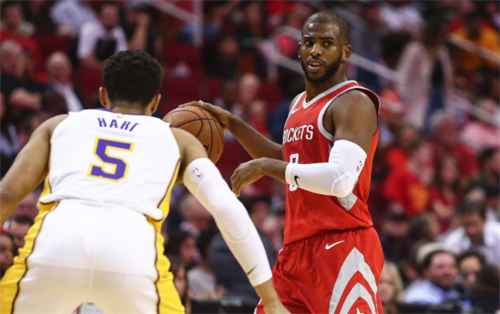
There are point guards who run offenses, and then there are point guards who control space, time, and decisions. Chris Paul belongs firmly in the second category. For nearly two decades, he has turned anticipation into an art form—jumping passing lanes, disrupting actions before they fully develop, and making elite NBA players look momentarily unsure of themselves.
Predicting a passing route is not about gambling or guessing. It is about processing information faster than the offense can hide it. This is where Paul has separated himself from his peers. He does not react to passes. He expects them.
For players and fans who understand NBA-level concepts—pick and roll coverages, weak-side spacing, post-up reads—Paul’s defensive and anticipatory instincts offer a masterclass. This article breaks down how those instincts work, and more importantly, how they can be learned.
Anticipation Starts Before the Play Does:
The common misconception is that passing anticipation begins when the ball handler picks up the dribble. In reality, it begins two or three actions earlier.
Chris Paul is constantly scanning: personnel, alignment, floor balance. Before a pick and roll is even initiated, he already knows the most likely second and third options. Is the screener a pop threat or a rim runner? Is the weak-side shooter a career 40-percent three-point shooter or a reluctant spacer? These details matter.
Elite anticipation is about probability, not certainty. Paul is not predicting a single outcome. He is narrowing the offense’s choices until only one or two passes make sense.
Understanding Court Geometry and Offensive Spacing
Basketball is a game of angles. Passing routes are not random; they are dictated by spacing and timing.
In a standard high pick and roll, the ball handler has three primary reads:
1. The roll man diving to the rim;
2. The weak-side corner shooter;
3. The pull-up or pocket pass variation;
Chris Paul positions himself to eliminate one option entirely, forcing the ball toward the next-most predictable read. If he shades slightly toward the roll man, he shortens the window for the pocket pass. That subtle step often buys him just enough time to recover or bait the skip pass.
This is not guesswork. It is geometry applied in motion.
Reading the Ball Handler’s Body Language
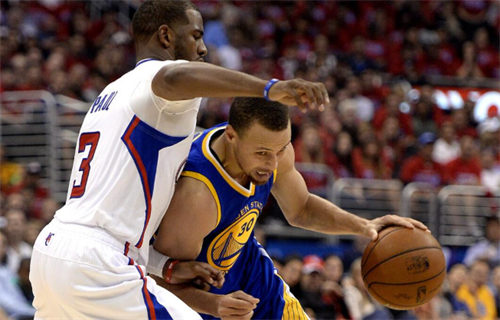
NBA players are trained to disguise intentions, but no one can fully hide biomechanics.
Paul watches:
-Hip orientation: Hips don’t lie. A squared stance limits cross-court passes.
-Foot placement: A planted inside foot often precedes a kick-out.
-Shoulder tilt: A slight dip can signal a one-hand pass to the corner.
The eyes matter less than most people think. Veteran guards manipulate eye direction routinely. Paul knows this. He trusts the body, not the face.
This is why he so often appears to “teleport” into passing lanes. He isn’t faster. He is simply earlier.
Film Study: Where Anticipation Is Really Built
Chris Paul’s reputation as a film junkie is well-earned. Anticipation is sharpened in the film room long before it shows up on the floor.
Every team has tendencies:
-A horns set that always flows into a dribble handoff
-A post-up that triggers a baseline cutter
-A fast break pattern that favors the right wing
Paul studies these patterns relentlessly. By the second quarter, he is already testing whether those tendencies hold under pressure. By the fourth, he is exploiting them.
This is why he racks up steals without gambling. He is not reacting to improvisation. He is punishing predictability.
Using Defensive Positioning to Dictate the Pass:
Great defenders don’t chase the ball. They shape the offense’s decision tree.
Paul excels at what coaches call “showing help without committing.” He positions himself just close enough to discourage a drive, while still being balanced enough to recover to the passing lane. This dual threat forces hesitation.
That half-second of doubt is enough.
In pick and roll coverage, he often angles his body to suggest one pass is open, only to slide into the lane once the ball handler commits. This is advanced deception, executed with surgical precision.
Anticipation in Transition and the Fast Break:
Fast breaks are chaos for most defenders. For Paul, they are opportunities.
In transition, offenses tend to default to familiar lanes: rim run, ball-side wing, trailing shooter. Paul reads lane discipline immediately. If the ball handler drifts wide, Paul knows the pass to the middle is unlikely. If the big runs straight to the rim, the drop-off becomes predictable.
He doesn’t sprint blindly. He runs to the pass, not the man.
This is why he remains effective even as his raw speed declines. Anticipation ages far better than athleticism.
Post-Ups and the Art of the Dig:
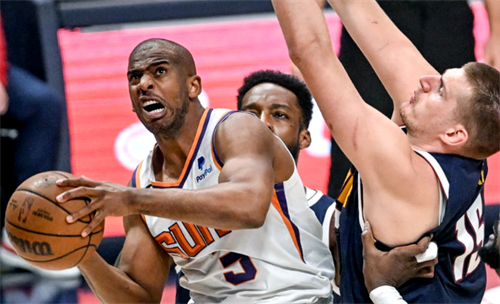
Post defense is often viewed as a big man’s responsibility, but Paul has made a career out of disrupting post-ups.
He times his digs based on the offensive player’s gather rhythm. When the post player turns baseline, the skip pass becomes the most natural counter. Paul already knows this. His hands are active, his feet are set, and the passing lane shrinks instantly.
The result is often a deflection that never shows up as a steal, but still kills the possession.
These are the invisible plays that define elite defenders.
Common Mistakes Players Make When Trying to Anticipate:
Many players attempt to mimic anticipation and end up gambling. The difference is discipline.Common errors include:
-Overcommitting to the first read;
-Watching only the ball and losing peripheral awareness;
-Jumping passing lanes without a recovery angle;
Paul rarely leaves his feet without a plan. If he misses, he knows exactly where to recover. Anticipation without structure is just risk. Paul’s game is built on calculated pressure, not recklessness.
How Non-Professionals Can Train These Skills?
You don’t need NBA athleticism to improve anticipation. You need intentional reps.
Start with film. Watch possessions without tracking the ball. Focus on spacing, alignment, and the second action. During practice, emphasize positioning over steals. Work on staying balanced, hands active, eyes scanning.
Most importantly, learn to be patient. Anticipation improves through recognition, not effort alone.
Applying Anticipation in Real Games:
In live competition, context matters. Early in games, offenses probe and adjust. Paul uses the first quarter to gather data. By the second half, he applies pressure.
He also understands game flow. In close games, players revert to comfort zones. That is when anticipation becomes most valuable.
Knowing when not to gamble is as important as knowing when to strike.
Learning From Chris Paul Without Copying Him
Chris Paul’s anticipation is not magic. It is the result of preparation, discipline, and a deep understanding of basketball logic.
You don’t need to be six feet tall with a Hall of Fame résumé to apply these principles. You need awareness, patience, and respect for the game’s structure.
Predicting passing routes is not about stealing the ball. It is about owning the possession before the pass is thrown.That is the real lesson Chris Paul has been teaching all along.
References:
[1]SportsRush. (2023). Two-time Warriors champion places Chris Paul next to Gary Payton and Jason Kidd for defensive capabilities. SportsRush.https://thesportsrush.com/nba-news-2x-warriors-champion-places-chris-paul-next-to-gary-payton-jason-kidd-per-defensive-capabilities/
[2]Lowe, Z. (2017, April 11). Chris Paul’s pursuit of passing perfection. Sports Illustrated.https://www.si.com/nba/2017/04/11/chris-paul-court-vision-passing-clippers-nba-playoffs
[3]MacMahon, T. (2018, January 19). Chris Paul is pursuing passing perfection with the Houston Rockets. ESPN.https://www.espn.com.au/nba/story/_/id/22045158/chris-paul-pursuing-passing-perfection-houston-rockets-nba

Three Basic Strategies for Safely Carrying the Ball Over the Half-Field in the Face of Pressured Defense