




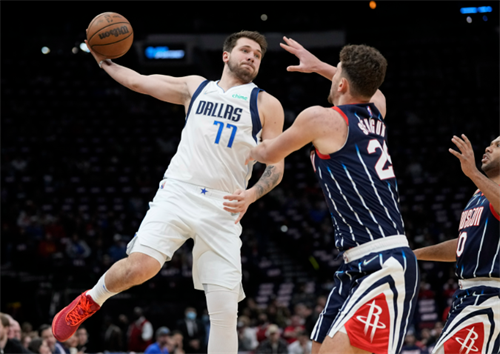
Luka Dončić is often described as a generational talent, but his dominance is not rooted solely in athleticism. Unlike the elite sprinters or explosive jumpers of the NBA, Dončić thrives on timing, anticipation, and rhythm manipulation. His ability to alter pace, delay movement, and exploit defensive hesitations allows him to create multiple offensive opportunities in every possession. For coaches, analysts, and serious NBA fans, understanding how Dončić leverages rhythm discrepancies is a masterclass in modern offensive basketball.
The Hidden Advantage of Rhythm:
The NBA is a game of milliseconds. Athletic players often rely on speed, strength, and verticality to create separation. Dončić, however, excels by forcing defenders to react out of rhythm, turning standard defensive setups into predictable patterns. Rhythm discrepancies occur when the offensive player deviates from expected movement or timing—pausing slightly, accelerating, decelerating, or changing direction in ways the defense cannot immediately adjust to.
By controlling rhythm, Dončić effectively extends the decision-making window for himself while compressing the reaction time of defenders. The result is more passing lanes, cleaner shots, and higher efficiency in pick-and-roll and isolation situations. This approach also keeps defenders guessing, increases foul opportunities, and allows for repeated exploitation without overt athletic advantage.
Understanding Rhythm Discrepancies in Modern NBA Offense:
Rhythm is the heartbeat of offense. In half-court sets, every movement is choreographed with expected timing. Fast breaks often have default spacing and predictable lanes. Dončić manipulates both. By alternating acceleration and deceleration, he creates micro-mismatches in timing.
Defenders, trained to anticipate standard motion—like immediate drives after a pick—struggle against variations. A slight pause can bait a hedge on a pick-and-roll or freeze a weak-side help defender. In essence, Dončić changes the script without changing the play, and that subtlety multiplies offensive options.
Opportunity One: Manipulating the Pick and Roll with Pace Changes
The pick-and-roll is NBA basketball’s most common offensive action. Traditionally, the ball handler reads the roll man, the screener’s defender, and weak-side coverage. Dončić disrupts this expected flow by altering pace mid-action.
He might approach the screen slowly, forcing defenders to overcommit, then explode past or pull defenders toward him with hesitation. This rhythm discrepancy forces late switches, creates open roll opportunities, and sometimes leaves shooters unguarded in the corners. By varying tempo, Dončić compresses defensive reaction time, converting a standard pick-and-roll into multiple scoring options.
Opportunity Two: Creating Step-Back Space Without Speed Separation
Dončić’s signature step-back is not a product of elite quickness but of rhythm manipulation. He slows slightly before initiating the move, causing defenders to hesitate and lose balance. This micro-pause generates a fraction of space that translates into open mid-range or three-point shots.
The beauty lies in predictability and patience. Even against disciplined NBA defenders, the step-back remains effective because it is timed perfectly, exploiting defensive expectations rather than physical mismatch. Rhythm, balance, and footwork become more valuable than pure speed, illustrating how Dončić compensates for average lateral quickness compared to other elite guards.
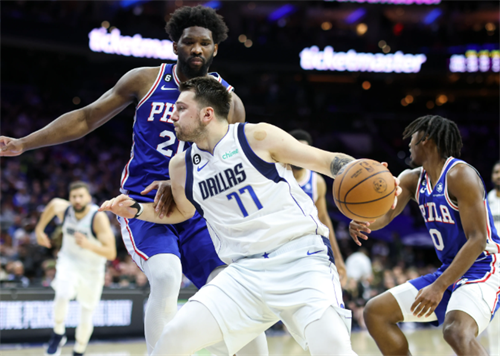
Opportunity Three: Freezing Help Defenders to Open Passing Windows
Dončić’s court vision is enhanced by his ability to delay his drives, effectively freezing weak-side help defenders. A slight hesitation in approach forces a helping big man or corner defender to commit too early, opening passing lanes to shooters, cutters, or roll men.
For example, during a pick-and-roll, Dončić might pause just before the gap, making the help defender momentarily stationary. He then delivers a skip pass or pocket pass with perfect timing, converting defensive alignment into scoring opportunities. This technique requires both anticipation and precision, which Dončić consistently demonstrates.
Opportunity Four: Controlling Post-Ups Against Smaller Defenders
Though primarily a guard, Dončić frequently engages in post-up situations, especially against undersized defenders. Here, rhythm control creates space and reaction delays. By altering footwork tempo—pausing, leaning, and then executing a shoulder fake—he forces defenders to react slowly or commit fouls.
This manipulation also prevents immediate double-teams, allowing Dončić to either turn for a shot, pass to the rolling big, or kick out to shooters. Post-ups, when combined with rhythm discrepancies, give Dončić an offensive toolkit beyond isolation speed, enhancing versatility and unpredictability.
Opportunity Five: Dictating Late-Clock Offense Under Pressure
Late-clock scenarios are pressure-packed. Players often rush decisions to beat the shot clock, leading to turnovers or low-quality shots. Dončić controls tempo, forcing defenses into uncomfortable positions. By slowing possessions slightly, controlling movement, and exploiting timing, he maximizes options in crunch situations.
This skill is critical in clutch moments. With only seconds left on the clock, Dončić can orchestrate spacing, decide whether to drive, pass, or step-back, and create high-percentage opportunities where defenders overextend or miscommunicate.
Common Defensive Mistakes Against Rhythm-Based Scorers:
Defending rhythm-based players like Dončić exposes certain weaknesses in conventional defense:
Overcommitting early – Reacting too quickly leaves passing lanes open.
Watching only the ball – Neglecting peripheral alignment allows cut lanes and skip passes.
Losing balance during hesitation – A slight misstep or early lean can render a defender ineffective.
Dončić exploits these errors not by speed, but by forcing timing miscalculations, a subtle and repeatable approach that frustrates even veteran defenders.
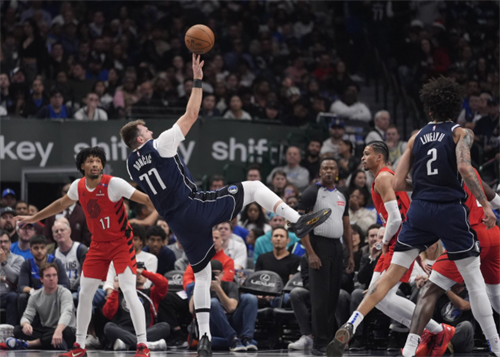
How Young Players Can Apply Dončić’s Principles?
Luka Dončić is a once-in-a-generation talent, but rhythm-based offensive skills can be taught and practiced. Key lessons include:
Patience over haste – One of Dončić’s hallmarks is his ability to read the defense before making a move. Instead of forcing shots or drives, he allows defenders to commit themselves first. Young players can practice this by intentionally slowing down their reads during drills, waiting for defenders to reveal gaps or tendencies, and making decisions based on observed weaknesses rather than instinct alone. This cultivates a more thoughtful, strategic approach to offense.
Observation – Dončić’s success stems largely from his ability to notice subtle details: how defenders position their feet, the spacing between teammates, and the angles of help defenders. Developing this observational skill requires deliberate effort. For instance, players can watch film not just to study opponents’ plays, but to focus on defensive reactions, off-ball movements, and how small adjustments in positioning create opportunities.
Controlled hesitations – A small pause or change in pace can disrupt defenders’ timing and open passing or driving lanes. Dončić uses micro hesitations to manipulate opponents without breaking the flow of the offense. Young players can integrate this principle by practicing dribbling with deliberate rhythm changes, learning to mix hesitation moves with explosive drives, and understanding when a split-second delay can create a high-percentage opportunity.
Decision-making under pressure – Late-clock situations often define games, and Dončić excels in maintaining composure when the shot clock winds down. Drills that simulate these conditions—such as timed possessions, high-pressure passing exercises, or scrimmages with shot-clock constraints—can help young players improve their ability to make smart choices under stress, enhancing their adaptability in real games.
These principles improve basketball IQ, court vision, and adaptability at all levels of play.
Conclusion: Rhythm as a Sustainable Superstar Skill
Dončić’s mastery of rhythm discrepancies demonstrates that timing, anticipation, and decision-making often outweigh sheer athleticism in modern NBA offense. By manipulating pace, freezing defenders, and exploiting micro-timing variations, he creates five distinct offensive opportunities every possession—pick-and-roll advantages, step-back spacing, passing lane exploitation, post-up control, and late-clock management.
For coaches, analysts, and aspiring players, Dončić’s approach highlights a universal truth: understanding rhythm and flow can transform talent into dominance. It’s not just about scoring. It’s about commanding the floor, dictating defensive reactions, and expanding the offensive toolbox.
In the evolving NBA landscape, rhythm control is a repeatable, teachable, and sustainable skill—and Luka Dončić is its preeminent practitioner.
Reference:
[1]Lowe, Z. (2017, April 11). Chris Paul’s court vision and passing mastery. Sports Illustrated. https://www.si.com/nba/mavericks/onsi/news/dallas-mavs-luka-doncic-posting-up-more-providing-major-advantage
[2]Pergl, F. (2023). How Luka Dončić built the NBA’s most dangerous isolation repertoire. ESPN. https://www.espn.com/nba/story/_/id/34822076/how-luka-doncic-built-nba-most-dangerous-isolation-repertoire

Three Basic Strategies for Safely Carrying the Ball Over the Half-Field in the Face of Pressured Defense